Developer Offer
Try ImaginePro API with 50 Free Credits
Build and ship AI-powered visuals with Midjourney, Flux, and more — free credits refresh every month.
Should You Let Facebooks AI Scan Your Camera Roll
Facebook is intensifying its collection of personal data by targeting a new source: the photos on your phone that you haven't even posted. The social media giant has begun asking users for permission to access their entire camera roll for a new AI-powered feature.
What is Facebook Asking For?
As reported by Techcrunch, some users are seeing a pop-up message asking to “allow cloud processing” of their photos. The message explains that to generate creative ideas for you, Facebook will continuously select and upload media from your camera roll based on factors like time, location, or theme. In exchange, the platform will offer suggestions for collages, recaps, or AI restyling for events like birthdays and graduations. Facebook states it won't use these photos for ad targeting, but the implications go much deeper.
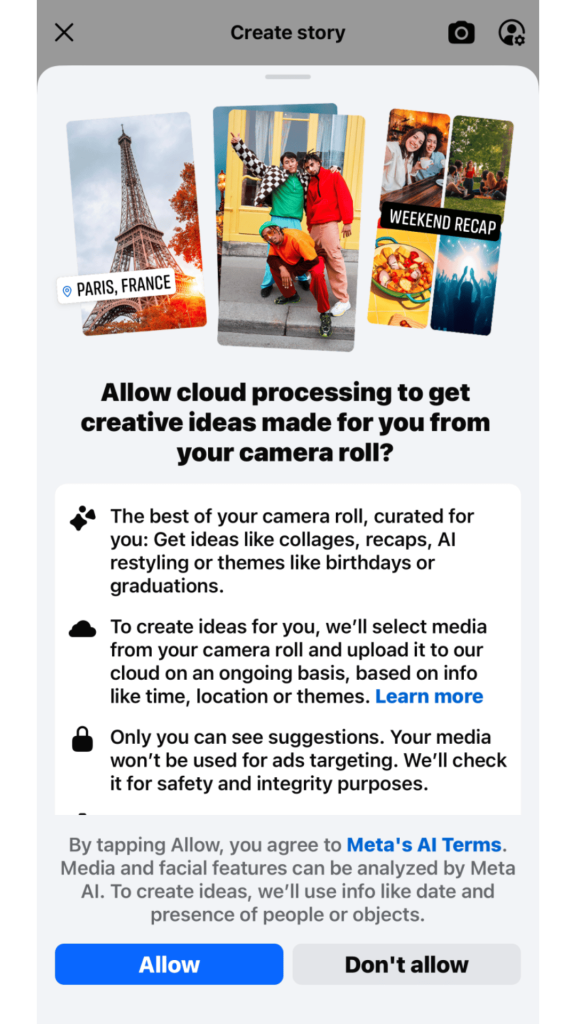
The Fine Print What Meta Can Do With Your Photos
Granting this permission means agreeing to Meta's AI terms of service, which allow the company to analyze the images you upload using AI, including identifying “facial features.” Furthermore, Facebook reserves the right to subject any content to “automated or manual (i.e. human) review,” potentially involving third-party vendors. This means your private camera roll photos could potentially be viewed by Meta employees or contractors.
Privacy Red Flags and Unanswered Questions
This feature raises several serious privacy concerns. For instance, Meta’s terms warn users not to share images of people from Illinois or Texas without their legal consent, due to strict biometric privacy laws in those states. It's unclear how this is manageable when granting blanket access to a camera roll that might contain photos from a family trip to Chicago or Austin.
Other significant worries include the scanning of sensitive images. What about photos of your children you intentionally keep off social media, or even more private images like bath time photos or intimate pictures of yourself or a partner? There's nothing in Meta’s current messaging to suggest these would be excluded from analysis.
Although the feature is opt-in, the public reaction has been largely negative, as seen in comments on Reddit. One user pointed out a critical flaw in consent: even if you decline, your image can still be analyzed if a friend or family member with the app installed shares a photo of you.
How Does This Compare to Apple and Google?
Other tech giants offer similar cloud photo services. Apple, for example, also creates montages from user photos but claims to perform AI analysis locally on your device. However, its terms grant it a broad license to use materials you submit for its own internal purposes.
Google also allows automatic uploads and, while stating you own your photos, retains the right to modify, create derivative works from, and share your content with contractors. Google's past is not without incident; it once famously deleted a father's entire Google account after its AI mistakenly flagged a medical photo of his son as child sexual abuse material.
Our Advice Protecting Your Photo Privacy
Before allowing any service to automatically access and analyze your photos, ensure you completely trust that provider. It is wise to research their history with user data, considering Meta's past issues with scraping user photos for AI training and the major Cambridge Analytica scandal.
Beyond that, be mindful of who you share your photos with. Only share with people you trust and communicate your comfort level regarding how they use and share those images.
Compare Plans & Pricing
Find the plan that matches your workload and unlock full access to ImaginePro.
| Plan | Price | Highlights |
|---|---|---|
| Standard | $8 / month |
|
| Premium | $20 / month |
|
Need custom terms? Talk to us to tailor credits, rate limits, or deployment options.
View All Pricing Details