Developer Offer
Try ImaginePro API with 50 Free Credits
Build and ship AI-powered visuals with Midjourney, Flux, and more — free credits refresh every month.
Can Human Thinkers Survive The AI Revolution
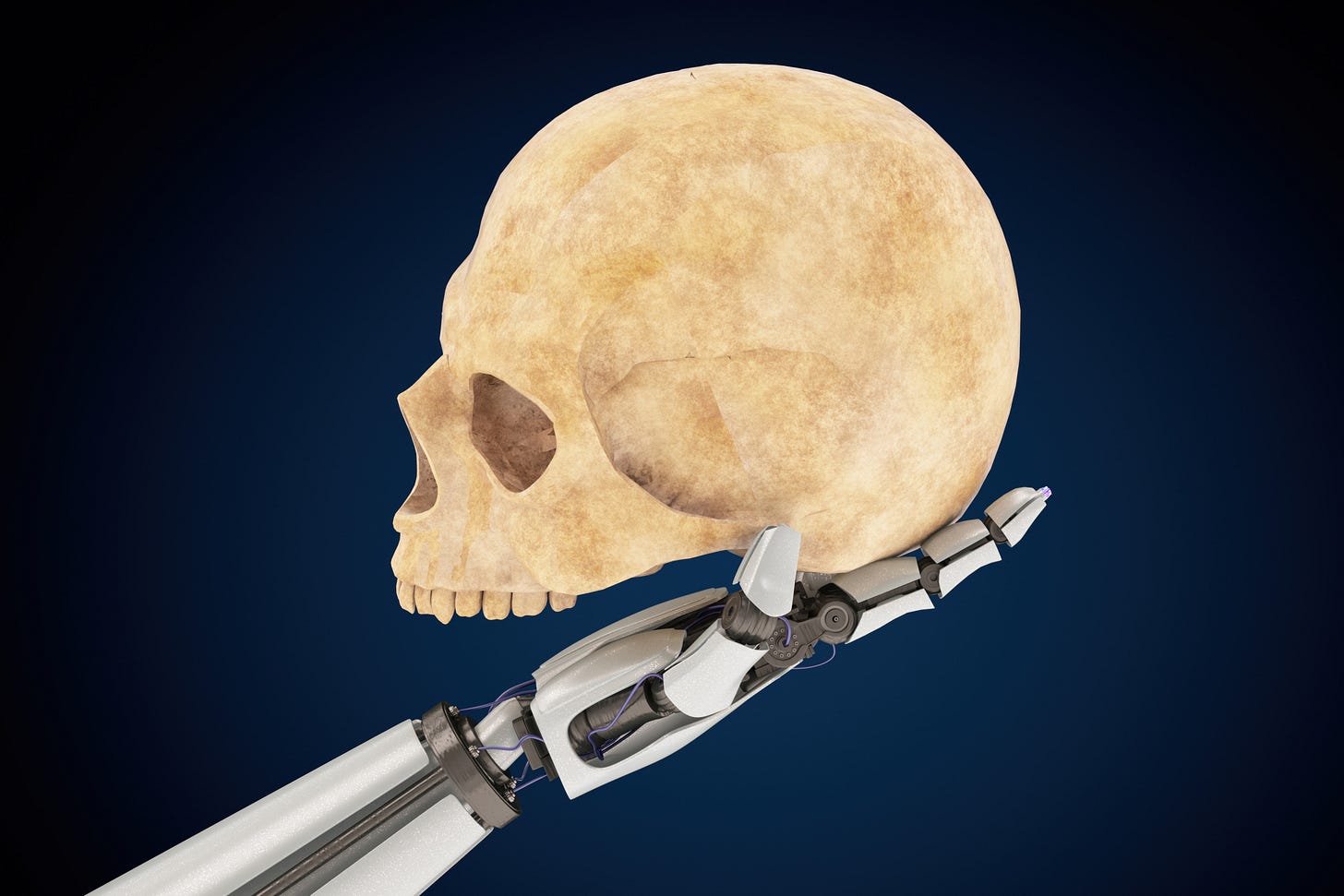
The Shock of the Machine
The Thinker just discovered, with a mix of awe and quiet dread, that ChatGPT—a machine—could write his latest policy memo better and faster than he could.
He had asked it, on a whim, to summarize the security implications of EU strategic autonomy. In 10 seconds, it produced 800 words of clear, confident, jargon-laced authority. It had citations, subheadings, even a well-balanced conclusion.
Emboldened, he then asked for a rewrite in the style of the Thinker himself. The result had less clarity, excessive confidence, and an eerie familiarity that made his stomach turn.
The Thinker read it twice. Then a third time. Then he poured himself a drink. Not bad, he admitted. In fact, it was more than not bad. It was credible, which is all anyone really asks for in his world. It broke no new ground, but who did? The prose was fluent, the analysis plausible, and the tone was perfectly calibrated: thoughtful, measured, and with an air of possessing inside information.
It sounded exactly like him. Or, perhaps more alarmingly, like everyone.
He considered asking the Machine to lunch but quickly realized that his usual strategies for dealing with up-and-coming talent would not work. It didn’t need an internship. It didn’t even need lunch. He stared at the blinking cursor on his own draft—stuck on paragraph two for the last hour—and wondered if the profession of thinking still made sense.
The Craft of Thinking Devalued
He had cultivated a craft: reading widely, writing carefully, and mastering the subtle alchemy of jargon and judgment. He knew how to sound cautious but not evasive and how to adapt old ideas to new geopolitical developments. He had perfected the art of the policy piece.
Now, the Machine could perform all those tricks too. Without sleep.
Worse still, the Machine had no ego. No impostor syndrome. It didn’t spend afternoons puzzling over a metaphor or failing to understand footnote formats. It didn’t need to impress donors or clean the kitchen between paragraphs. It just... wrote. In seconds.
The Thinker knew the standard arguments. The Machine doesn’t “understand” anything; it’s just pattern recognition. It lacks judgment and experience. It cannot therefore think. But lately, he’d begun to question whether that is so different from what thinkers do. Much of the job, if he was honest, relied on stylized prediction algorithms: repeat the right words in the right sequence and release them into the policy discourse. The Thinker’s business seemed to be mostly about pattern recognition already.
Maybe he was wrong to ever believe in original thought. Every memo was built on someone else’s memo. The Machine just stands on many, many more shoulders. It doesn’t plagiarize; it just streamlines the process of learning.
The Human Advantage: Persona and Presence
He was not panicking, exactly. He reasoned it would come first for the coders and research assistants—people with measurable outputs. His job description, “thinks about stuff,” felt bulletproof in its vagueness.
But maybe he can do more than survive. The Thinker still believes that the Machine can’t come for him because he is not just thought. He is also a persona. The Machine has a PR problem. It lacks reputation, personality, and a “distinctive voice” that makes editors nod knowingly at cocktail parties.
A New Collaboration: Thinker and Machine
The Thinker may even gain something from the Machine, at least for a while. Because, of course, the Machine wrote this essay. But the Thinker asked it to. He then spent hours correcting its many shortcomings using three different AI platforms, with each iteration becoming more recognizably human in its neuroses.
And maybe that’s the future: not Thinker versus Machine, but the Thinker wondering, and then asking, with just a touch of guilt, for the Machine to start wondering along with him. It's an oddly intimate bio-mechanical collaboration where the Machine’s speed supercharges the Thinker’s persona.
It’s not quite the apocalypse he’d feared. The Thinker will get to keep his job, his byline, and his speaking fees. The future is something more subtle and perhaps more unsettling: a world where the Machine helps the Thinker be more human than he could ever manage on his own.
This piece was written by Jeremy Shapiro, research director of the European Council on Foreign Relations, and ChatGPT.
This article originally appeared on Jeremy Shapiro’s Substack, Blue Blaze.
Follow Persuasion on Twitter, LinkedIn, and YouTube to keep up with our latest articles, podcasts, and events.
Compare Plans & Pricing
Find the plan that matches your workload and unlock full access to ImaginePro.
| Plan | Price | Highlights |
|---|---|---|
| Standard | $8 / month |
|
| Premium | $20 / month |
|
Need custom terms? Talk to us to tailor credits, rate limits, or deployment options.
View All Pricing Details