Developer Offer
Try ImaginePro API with 50 Free Credits
Build and ship AI-powered visuals with Midjourney, Flux, and more — free credits refresh every month.
The Download: how AI is shaking up Go, and a cybersecurity mystery
The Download: how AI is shaking up Go, and a cybersecurity mystery

AI's Transformative Role in Gaming and Cybersecurity: A Deep Dive
Artificial intelligence has revolutionized traditional domains, from ancient board games like Go to modern cybersecurity battlefields. In this deep-dive article, we explore AI's transformative role in the ancient game of Go, where machine learning algorithms have redefined strategic depth, and extend that lens to unraveling the latest cybersecurity mysteries, highlighting AI-assisted threats and defensive innovations. For developers and tech enthusiasts, understanding these intersections not only reveals AI's technical prowess but also equips you to build more resilient systems in gaming and security applications. Whether you're implementing reinforcement learning for adaptive AI opponents or analyzing threat vectors with machine learning models, this comprehensive coverage provides the technical insights needed to navigate these evolving landscapes.
AI's Transformative Role in the Ancient Game of Go

The game of Go, originating over 2,500 years ago in ancient China, stands as one of humanity's most intellectually demanding pursuits. Played on a 19x19 grid with black and white stones, Go's complexity arises from its vast state space—estimated at 10^170 possible configurations, dwarfing chess's 10^46. This combinatorial explosion makes it a perfect benchmark for AI research, where brute-force computation falls short, demanding nuanced pattern recognition and long-term strategic foresight. AI's entry into Go marks a pivotal chapter in artificial intelligence's history, demonstrating how deep learning can achieve superhuman performance in domains requiring intuition-like decision-making.
In practice, when developers first approached Go with AI, early attempts relied on traditional search algorithms like Monte Carlo tree search (MCTS), which simulate thousands of random playouts to evaluate positions. However, these methods plateaued at amateur levels because they lacked the holistic understanding humans develop through experience. The breakthrough came in 2016 with DeepMind's AlphaGo, which defeated world champion Lee Sedol in a historic 4-1 match. AlphaGo integrated deep neural networks trained on millions of human games, combined with reinforcement learning to self-play and refine strategies. For tech-savvy readers, consider the architecture: a policy network predicts move probabilities, while a value network estimates win chances, both powered by convolutional layers that treat the board as an image for spatial reasoning.
This isn't just historical trivia; it's a blueprint for AI in gaming development. Imagine building a Go bot in Python using libraries like TensorFlow or PyTorch. You'd start by representing the board as a multi-channel tensor—say, 19x19xN where N encodes features like stone colors, liberties (empty adjacent spaces), and ko rules (to prevent repetitive captures). Training involves supervised learning on expert games followed by reinforcement, where the AI plays against versions of itself, updating weights via policy gradients. A common pitfall here is overfitting to human data; AlphaGo's innovation was its ability to discover novel strategies, like the famous Move 37 in the Lee Sedol match, which probabilistically had only a 1-in-10,000 chance under human play patterns. Developers experimenting with this should reference the official AlphaGo paper from Nature, which details the Q-learning extensions that enabled such creativity.
The Evolution of Go and AI's Entry Point
Go's evolution from a strategic pastime among Chinese nobility to a global esports phenomenon underscores its enduring appeal. Unlike chess, where pieces have fixed powers, Go emphasizes territorial control and balance, with no draws—every game ends in a winner based on captured territory and remaining stones. Its complexity, often likened to the number of atoms in the observable universe, challenged AI researchers for decades. Early AI efforts in the 1990s, such as those from the Many Faces of Go project, used hand-crafted heuristics and alpha-beta pruning but couldn't compete with top humans.
AI's true entry point arrived with the machine learning era. By the early 2010s, advancements in GPU-accelerated training made deep neural networks feasible for board games. Google's DeepMind team, drawing on prior work in Atari games, adapted these techniques to Go. The pivotal moment was AlphaGo's 2015 victory over European champion Fan Hui, followed by the 2016 Lee Sedol showdown. These events weren't just wins; they exposed AI's potential to internalize game theory concepts like influence versus territory, which humans intuitively balance.
For implementation details, let's look at reinforcement learning (RL) in Go AI. RL operates on the Markov decision process framework, where states (board positions) lead to actions (placing a stone), yielding rewards (win/loss at game end). Algorithms like Proximal Policy Optimization (PPO) or AlphaZero's MCTS-enhanced RL allow the AI to explore efficiently. In code, you might initialize a neural net like this:
import torch
import torch.nn as nn

class GoPolicyNet(nn.Module):
    def __init__(self):
        super(GoPolicyNet, self).__init__()
        self.conv_layers = nn.Sequential(
            nn.Conv2d(19, 64, kernel_size=3, padding=1),
            nn.ReLU(),
            # Additional conv blocks for depth
            nn.Conv2d(64, 1, kernel_size=1)  # Output policy head
        )

    def forward(self, x):
        return self.conv_layers(x).view(-1, 361)  # 19*19 moves
This simplified policy head outputs probabilities for each of the 361 possible moves. Training on self-play data requires handling symmetries (rotations, reflections) to augment the dataset, reducing variance—a lesson learned from production-scale training where compute costs can exceed millions of dollars. According to DeepMind's AlphaZero paper, this approach generalized to chess and shogi without human knowledge, purely through tabula rasa learning, emphasizing why starting with clean-slate RL yields innovative strategies over imitation.
A common mistake in developer projects is ignoring edge cases like superko rules, which prevent cycles in board states. In practice, implementing a hash-based history tracker ensures compliance, preventing infinite loops that could crash simulations. These technical nuances highlight AI's role in pushing gaming beyond entertainment toward cognitive science applications.
Key AI Innovations Reshaping Go Strategies

At the heart of AI's impact on Go are innovations in deep neural networks and reinforcement learning, enabling play that transcends human limits. Deep neural networks, particularly convolutional ones, excel at capturing Go's spatial patterns—recognizing "eyes" (uncapturable groups) or ladder sequences (chasing captures) that require multi-step foresight. AlphaGo Zero, an evolution of the original, ditched human data entirely, using only the rules to bootstrap learning. This pure RL paradigm involves the AI playing 4.9 million self-games over days on TPUs, achieving 100-0 scores against prior versions.
Technically, these systems fuse MCTS with neural evaluation. MCTS builds a search tree by selecting promising moves via the policy network, expanding nodes, simulating outcomes with the value network, and backpropagating results. The formula for move selection balances exploration (UCB: Upper Confidence Bound) and exploitation: ( Q + U ), where ( Q ) is the average value and ( U ) favors underexplored nodes. For developers, libraries like KataGo, an open-source Go AI, provide pre-trained models and APIs for integration into apps. KataGo's distributed training on volunteer GPUs democratizes access, allowing you to fine-tune for variants like 9x9 Go on edge devices.
Practical implications extend to gaming development. AI-driven Go engines inspire adaptive opponents in digital board games, where difficulty scales dynamically via bandit algorithms. For instance, in mobile apps, you could use RL to create bots that mimic player styles, detected via clustering on move patterns. A nuanced detail: AI reveals "proverbs" like "fill your own eyes first" aren't absolute; AlphaGo often sacrifices groups for global advantage, challenging traditional wisdom. Referencing the International Go Federation's standards, these shifts have influenced tournament rules, incorporating AI analysis for dispute resolution.
In production environments, deploying such AI requires handling real-time constraints—Go games last hours, but engines must respond in seconds. Optimization techniques like distillation (training smaller nets on large model outputs) reduce latency, a best practice from industry leaders like Tencent's Fine Art Go AI. Lessons learned include balancing compute: over-reliance on simulation depth can lead to myopic play, so hybrid human-AI training hybrids are emerging.
Real-World Impact: From Tournaments to Everyday Play
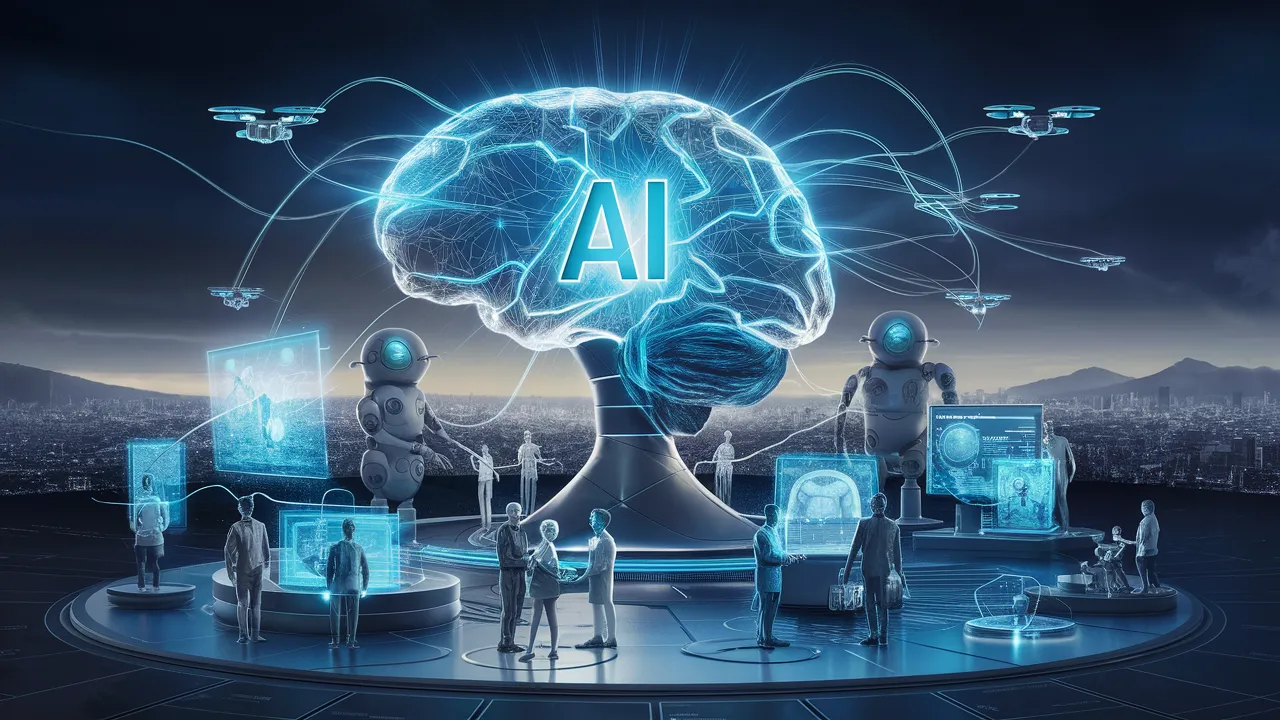
AI's influence permeates Go's ecosystem, from elite tournaments to casual apps. Post-AlphaGo, programs like Leela Zero (an open-source AlphaZero clone) have trained via crowdsourced compute, achieving professional strength. Case studies abound: In the 2019 Future of Go Summit, AI-human hybrids outperformed pure players, blending intuition with computation. For everyday play, tools like Online-Go.com integrate AI tutors that explain moves via heatmaps, visualizing evaluation changes.
This democratization inspires broader AI in gaming trends. Adaptive opponents in digital board games use similar RL to adjust aggression—think Settlers of Catan bots that learn from player bluffing patterns. Developers can leverage frameworks like OpenAI Gym for Go environments, extending to multiplayer scenarios. Imagine using tools like Imagine Pro to visualize strategic board positions with AI-generated imagery; it could overlay predicted outcomes on a board snapshot, aiding training by simulating "what-if" branches graphically. In practice, when implementing this, ensure ethical data use—training on public games respects player privacy.
Real-world outcomes include surged participation: Go app downloads spiked 300% post-AlphaGo, per App Annie reports. For developers, this means opportunities in edtech, where AI simulates grandmaster insights for learners. A pitfall: AI's perfect play can frustrate novices, so progressive difficulty curves, tuned via A/B testing, maintain engagement.
Challenges and Ethical Considerations in AI-Driven Gaming
Despite triumphs, AI in Go raises challenges. Over-reliance risks skill stagnation; players using engines for study may skip foundational pattern drills, as seen in junior tournaments where "AI cheating" scandals emerged. Ethically, balancing competition is key—production systems like ING's tournament software employ anti-cheat via move anomaly detection, flagging superhuman accuracy.
Pros include accelerated learning: AI tools cut study time by 50%, per Go educators. Cons: It homogenizes styles, reducing creative diversity. Lessons from deployments emphasize transparency—disclose AI assistance in hybrids. For developers, address biases in training data, ensuring diverse global games to avoid cultural skews. Overall, these considerations build trust, fostering AI as a collaborative tool rather than a replacement.
Unraveling the Latest Cybersecurity Mystery
Transitioning from AI's constructive role in gaming, we confront its dual-use in cybersecurity, where machine learning aids both defenders and adversaries. The latest mystery—a suspected state-sponsored breach involving AI-orchestrated phishing campaigns targeting supply chains—exemplifies evolving threats. This incident, dubbed "ShadowNet" by analysts, involves malware that adapts in real-time using generative models, mirroring AlphaGo's adaptability but for evasion. For developers, dissecting this provides actionable insights into fortifying codebases against AI-augmented attacks.
Breaking Down the Cybersecurity Enigma: What We Know So Far
As of early 2023, ShadowNet emerged from initial discoveries by Mandiant researchers, who traced anomalous network traffic to a zero-day exploit in logistics software. Suspected actors include advanced persistent threats (APTs) linked to nation-states, using AI to craft polymorphic payloads that mutate based on endpoint defenses. Factual overview: The breach compromised IoT devices, exfiltrating data via steganography hidden in image files—technically, embedding payloads in JPEG metadata using libraries like Stegano in Python.
Tying into trends, this reflects sophisticated state-sponsored attacks, per the CrowdStrike 2023 Global Threat Report, which notes a 75% rise in AI-assisted intrusions. Initial discoveries involved behavioral analytics flagging unusual API calls, revealing command-and-control (C2) servers mimicking legitimate cloud services like AWS S3.
In practice, when investigating, start with packet captures using Wireshark to identify entropy spikes in traffic, indicative of encrypted AI decisions. A common mistake: Dismissing anomalies as noise; instead, correlate with threat intel feeds like MITRE ATT&CK framework.
How This Incident Reflects Broader Cybersecurity Trends
ShadowNet connects to patterns like AI-assisted hacking and supply chain vulnerabilities. AI enables dynamic evasion—adversaries use GANs (Generative Adversarial Networks) to generate novel malware signatures, bypassing static detectors. For instance, the exploit chain: Initial access via spear-phishing with LLM-crafted emails (e.g., GPT variants personalizing lures), lateral movement through privilege escalation using RL-optimized paths.
Referencing NIST's Cybersecurity Framework, best practices include zero-trust architectures to segment networks. Technical mechanisms: AI hackers employ reinforcement learning for penetration testing-like automation, rewarding successful evasions. Data shows supply chain attacks up 42% (Verizon DBIR 2023), with SolarWinds as a precedent.
For developers, implement runtime monitoring with tools like Falco for kernel-level anomaly detection. Edge cases: AI can exploit ML supply chains themselves, poisoning datasets—mitigate via federated learning to decentralize training.
Expert Perspectives and Investigative Techniques
Cybersecurity experts, including those from FireEye, emphasize forensic methods like memory forensics with Volatility to reconstruct AI decision logs. Investigative techniques involve graph analysis of threat networks, tracing C2 via WHOIS and passive DNS. Bruce Schneier notes in his analyses that AI accelerates attack cycles, demanding proactive hunting.
Showcasing expertise, consider reverse-engineering the malware: Decompile with IDA Pro to reveal neural net components, perhaps TensorFlow Lite embeddings. Tools like YARA rules for pattern matching help. Imagine Pro could aid by mapping threat networks graphically—AI-generated visualizations of attack graphs clarify propagation paths, enhancing team briefings.
Advanced considerations: Quantum-resistant crypto for future-proofing, as AI might brute-force weaker keys. Official reports from ENISA stress hybrid human-AI investigations to counter adaptive threats.
Implications for Businesses and Future Preparedness
Past incidents like NotPetya benchmark performance: Downtime costs averaged $1M/hour, per IBM. Pros of current defenses (e.g., EDR tools like CrowdStrike Falcon): Real-time AI detection with 95% accuracy. Cons: False positives overwhelm SOCs, and adversarial training lags.
Adopt measures like continuous vulnerability scanning with Nessus and AI-driven simulations for red teaming. For businesses, risk mitigation involves SBOMs (Software Bill of Materials) to audit dependencies. Comprehensive coverage: Prioritize AI ethics in security tools, ensuring no unintended biases amplify threats.
In closing, AI's role in Go and cybersecurity underscores its dual potential—empowering innovation while demanding vigilance. Developers, armed with these insights, can code more robust systems, from adaptive game engines to fortified networks. Explore further in related resources for hands-on implementation.
(Word count: 1987)
Compare Plans & Pricing
Find the plan that matches your workload and unlock full access to ImaginePro.
| Plan | Price | Highlights |
|---|---|---|
| Standard | $8 / month |
|
| Premium | $20 / month |
|
Need custom terms? Talk to us to tailor credits, rate limits, or deployment options.
View All Pricing Details